How to Organize Everything You Need to Buy for a New Apartment
A move splits into three lists: what you need on the first night, what can wait a month, and what is worth waiting for a sale. One place for all of it beats a dozen tabs, screenshots and half-remembered measurements.
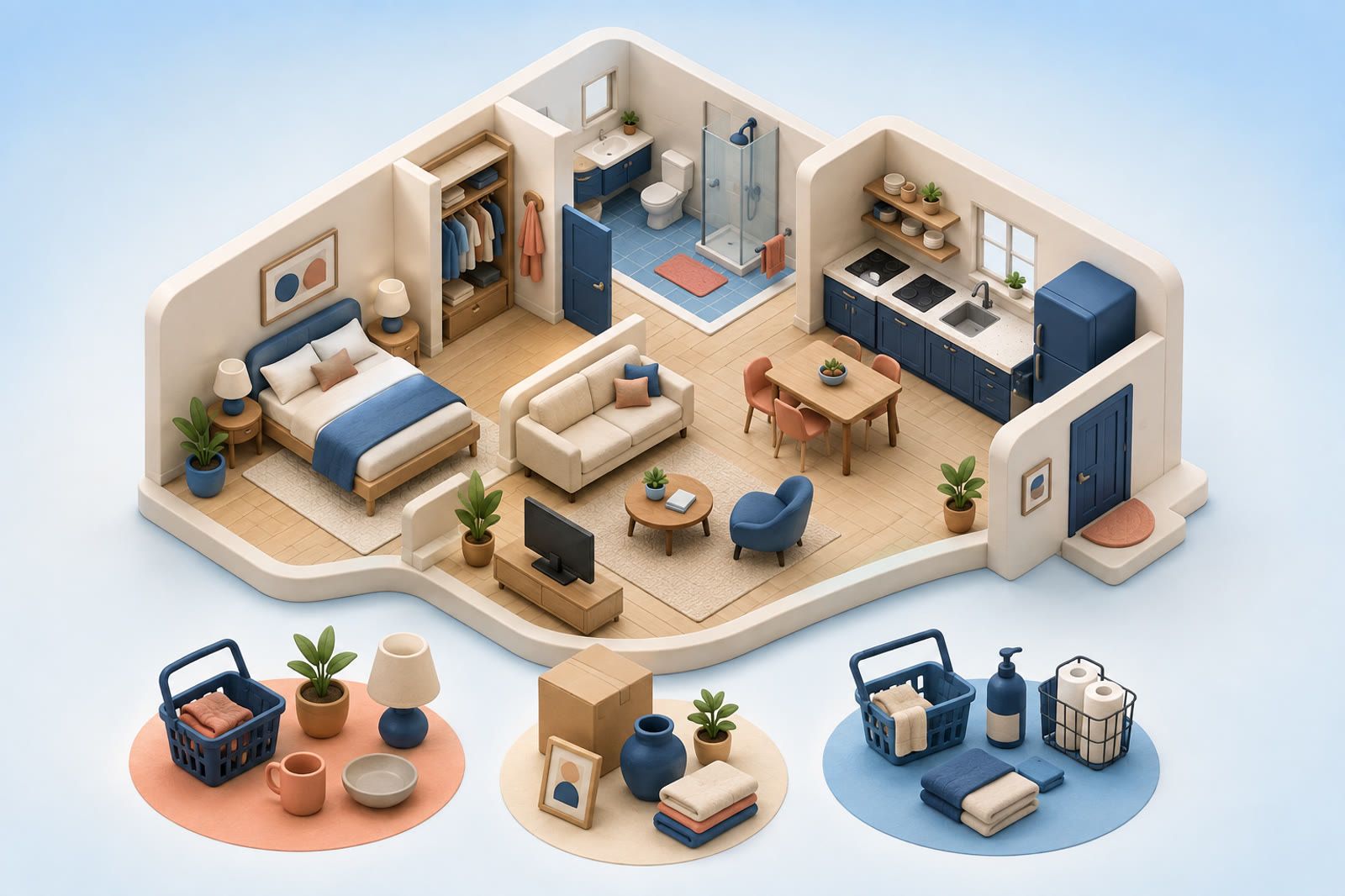
The best way to organize things to buy for a new apartment is by room and timing, not by retailer. First list what must work on move-in day, then what you need during the first month, and finally what can wait for a good price. This keeps urgent basics from competing with rugs, lamps, and other appealing but nonessential purchases.
Start with the apartment, not a generic checklist
Before shopping, walk through the actual space or study the floor plan. Measure doorways, elevators, stairs, wall spans, window recesses, and the intended footprint for large furniture. Photograph outlets, existing fixtures, storage, and awkward corners. Confirm what the lease or building already provides.
A generic new-apartment list may tell you to buy a microwave, shower curtain, or floor lamp even when the unit includes one, uses a shower door, or has sufficient built-in lighting. Your list should describe the gap in your apartment.
For every large item, store three measurements: maximum width, maximum depth, and delivery-path limit. A sofa that fits the living room but not the stair turn does not fit.
Divide the new-apartment buying list into three stages
Move-in day
Prioritize sleep, hygiene, simple food, safety, cleaning, and basic lighting. Typical essentials include bedding, towels, toilet paper, soap, essential medication, chargers, a lamp if overhead lighting is poor, bin bags, an all-purpose cleaner, a sponge, and the minimum tools needed to assemble furniture. Add a kettle, pan, plate, cup, and cutlery if you expect to cook immediately.
Keep a separate arrival box rather than burying these supplies in the moving truck. Include a change of clothes, documents, keys, water, and device cables.
First week to first month
Buy items once the apartment reveals how you use it: a laundry basket, drying rack, food-storage containers, basic cookware, hangers, a doormat, task lighting, and storage for daily clutter. This is also when you can judge whether you actually need a desk, shoe rack, entry bench, or extra shelving.
Later or when the right deal appears
Large rugs, accent chairs, upgraded cookware, decorative lighting, art, side tables, and specialty appliances can usually wait. So can duplicate seating and storage bought only to fill empty space. Living in the apartment briefly gives you information no inspiration board can provide.
Organize things to buy for a new apartment by room
Use room labels beneath the timing stages so you can shop and unpack coherently.
Bedroom: mattress or sleeping setup, bedding, bedside light, curtains where required, hangers, and essential clothing storage. Measure mattress access and check whether the bed frame needs tools or additional slats.
Bathroom: towels, bath mat, toilet brush, soap, basic cleaning products, and a shower curtain plus rings only if the bathroom needs them. Check cabinet depth before buying organizers.
Kitchen: one versatile pan, one pot, a knife, chopping board, utensils, plates, cups, food storage, dish soap, and a bin solution. Add appliances only after confirming counter space, outlet placement, and actual habits.
Living area: seating, task or ambient light, power access, window covering if needed, and a surface for daily use. Rugs, extra chairs, media furniture, and decorative storage can wait until circulation paths are clear.
Entry and utility: keys tray, doormat, basic toolkit, flashlight, batteries where needed, laundry supplies, and cleaning equipment. Confirm building rules before buying hardware that attaches to walls or doors.
Keep one list instead of ten tabs and screenshots
A product screenshot loses its live page, variant context, and availability. A tab disappears into a browser window. Save promising products into one system and attach the reason they are candidates: “fits 140 cm wall,” “washable cover,” or “under bedroom budget.”
In dEssence, saves can come from the Chrome extension, Telegram bot, or the web at dessence.ai. Saving does not automatically monitor a product. For a large purchase that can wait—such as a mattress, vacuum, desk, or sofa—you can choose the saved item and set up price or stock watching yourself.
The Free plan is $0 forever with no card, up to 20 saves a day, and 100 watched things checked daily. Pro costs $10 a month and allows a higher daily save limit, 100 watched things checked hourly. There is no native iOS or Android app.
Watching every spatula and towel creates noise. Use it for costly, specific products where a price change would affect the purchase decision.
Control the apartment budget without buying twice
Set a total furnishing budget, then reserve amounts for essential categories before browsing. Include delivery, assembly, taxes, installation supplies, and immediate replacements. Leave a contingency for needs discovered after moving in.
For each line item, compare three options: buy now, use a temporary substitute, or wait. Folding chairs can cover a short seating gap; cardboard boxes can reveal what kind of storage you need; a borrowed drill may prevent an unnecessary tool purchase.
Do not buy matching sets merely because they feel efficient. Sets often include pieces you will not use, and they make it harder to spend more on the item that matters—such as a supportive mattress or reliable desk chair. A coherent apartment can emerge gradually.
Review the list after one week and again after one month. Delete imagined needs, promote recurring frustrations, and stop watching anything that no longer fits the space or budget.
Staged buying works when the later stages stay visible. dEssence keeps the whole apartment list in one place and watches price and stock on what you have not bought yet.