First Apartment Kitchen Checklist: Before You Cook Anything
A twelve-person dinner set and no can opener. The first-apartment kitchen list, sorted by the week you actually need it.
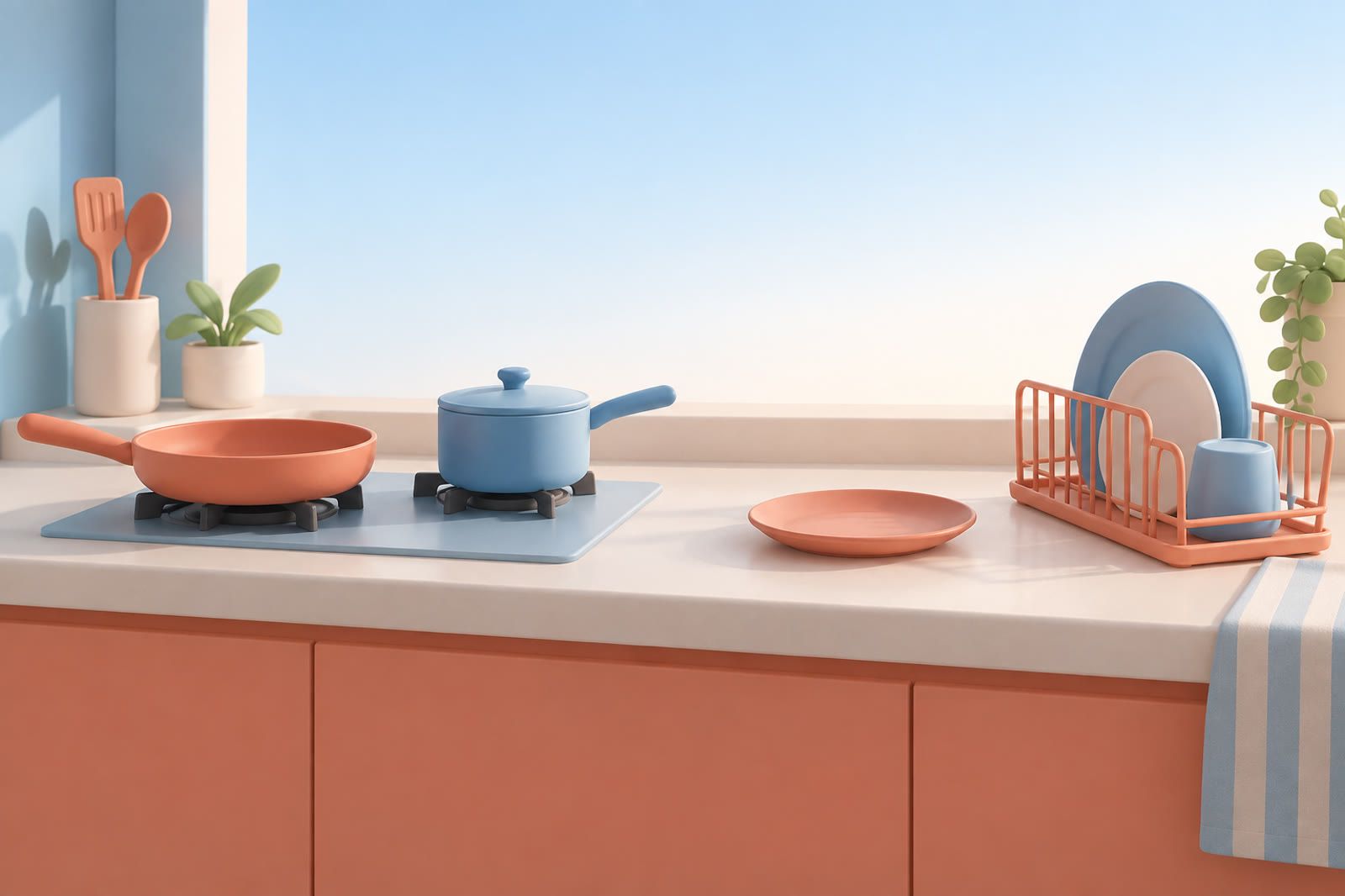
A first apartment kitchen checklist should let you prepare a simple dinner, eat it and clean up afterward. Start there. An empty cupboard can make a large matching set feel sensible, but the useful purchase is the item your actual meal requires.
Before shopping, choose something you already know how to cook. Pasta with vegetables, rice with eggs or a tray of roasted ingredients will expose the missing tools quickly. Walk through preparation, cooking, serving, leftovers and washing. Anything outside that sequence can wait until you have used the kitchen.
The quantities below assume ordinary home cooking and limited storage. Adjust place settings to the people who live there, and adjust cookware to the stove and meals you actually have.
First apartment kitchen checklist: cooking
One frying pan. Choose a pan that fits your largest useful burner and leaves room for the food you normally cook. Pick it up: the handle should feel secure and the weight manageable. A very large pan is awkward if the stove is small or the sink cannot comfortably hold it.
One larger pot and one smaller saucepan. The larger pot handles pasta, soup or a meal with leftovers. The smaller saucepan covers rice, sauces and reheating without making you wash the larger vessel. Lids help make them more versatile. If you rarely cook separate components, buy the larger pot first and add the saucepan when that limitation becomes real.
One baking tray, if you have a suitable oven. Measure the usable oven space before buying, including room to insert and remove the tray. A tray is useful for vegetables and simple oven meals. If the apartment has no oven, leave it off the shopping list.
One spatula and one stirring spoon. These cover turning and stirring for a basic meal. Choose utensils compatible with the cookware surface. Add a colander if draining pasta is part of your chosen dinner; otherwise, let your cooking habits decide whether it earns storage space.
Check stove compatibility before purchase. Some cooking surfaces need particular cookware, and appearance alone cannot confirm a match. Read the cookware's compatibility information and compare it with the appliance information available in the apartment.
Cutting and preparation
One comfortable kitchen knife. A useful general-purpose knife matters more than a block full of specialized blades. Check that your grip feels controlled and that you have a safe storage place. Choose a blade you can maintain rather than treating it as disposable when it becomes dull.
One cutting board. It should sit securely on the counter and fit your washing space. If you prepare raw meat and ready-to-eat ingredients, plan for separate clean preparation surfaces; an additional board can make that routine easier. Avoid choosing a board so large that washing it becomes a nuisance.
One vegetable peeler. Buy it if you regularly prepare potatoes, carrots or similar vegetables. It is a small tool with a clear task. A decorative preparation gadget with a narrower purpose can wait until you know you will use it.
Plates, bowls, mugs and cutlery
Buy plates, bowls, mugs and cutlery for the people living in the apartment, plus a pair of spare settings. That gives you room for a visitor or an item still waiting to be washed without committing a whole cupboard to entertaining.
For a person living alone, that means three plates, three bowls, three mugs and three sets of cutlery as a comfortable starting point. If storage is extremely tight, reduce the spares and wash more often. The point is a deliberate quantity, not a requirement to fill shelves.
Choose shapes that stack and fit the dishwasher if you have one. Check cupboard depth with the door closed. Wide plates can be inconvenient in shallow cabinets, and tall mugs can waste space beneath a low shelf.
Washing, storage and the things people forget
One drying rack or drying mat. Choose whichever fits beside the sink without covering the only preparation area. Check where water will drain. Even with a dishwasher, you need somewhere for washed cookware or an item you clean by hand.
A pair of food containers with lids. Begin with containers that fit a leftover portion and your refrigerator shelf. Use them before buying a large assortment. Add sizes when you discover a repeat need, and check suitability before using any container for reheating or freezing.
One rubbish bin and bags that fit it. Measure its intended location and allow space for the lid or cabinet door to open. Add a separate recycling container if your building requires sorting. Confirm the collection arrangements when you move in.
A pair of dishcloths, a pair of drying towels, a scrubber and dish soap. Having a clean cloth available makes it easier to replace a dirty one. Keep cleaning supplies where they are accessible without competing with food preparation.
One can opener, one measuring jug, a pair of dry oven mitts or pot holders, and a roll of foil. These are easy to overlook because they do not look like a meal. Check that the opener suits the cans you buy and that the jug is readable. Foil is optional if your usual cooking does not require it; follow the appliance instructions for its use.
Buy later, when a meal gives it a job
Leave the blender, slow cooker and other countertop appliances until you know what you will make with them. They need somewhere to live, somewhere to operate and parts you must clean afterward. An appliance that stays boxed because the counter is crowded has solved little.
Build a spice collection from actual meals. Start with the seasonings you already use and add what the next recipe needs. A large assortment can give you several jars you rarely open while still missing the ingredient you want tonight.
Pretty serving dishes, specialty baking equipment and tools for an unfamiliar recipe can also wait. Keep a later list with the meal beside each item. “Blender for the soup I make regularly” is a stronger reason than “every kitchen should have one.”
Borrow an occasional tool when that is practical. Living without it for a while helps you learn whether you need ownership or simply access for a particular dish.
Measure the apartment before buying the kitchen
Check what the landlord or a previous occupant has actually left for your use. Look inside cupboards and drawers rather than relying on the listing photographs. Record any supplied equipment and clarify anything you are unsure belongs with the apartment.
Photograph the stove, oven interior, sink area and empty storage. Measure usable shelf space, drawer depth and the area where a bin or rack could stand. Include obstacles such as hinges, pipes and door movement. An object fitting the opening does not necessarily mean it can be used comfortably there.
Keep the measurements beside the shopping list, with clear labels explaining what was measured. Mark each item as already present, still needed or waiting. If someone offers you cookware, update the list before going to the shop.
For that reference, save the photographs and your measurement note yourself in the dEssence web app, then ask in your own words from the shop about what you saved. It does not connect to your inbox or calendar. If you later want price or stock watching on a saved product, set up that watch separately; saving a photograph or product starts no monitoring.
Spend on the parts you handle every day
Secondhand plates, mugs and uncomplicated utensils can be sensible when they are intact, cleanable and suitable for your use. A basic household shop can cover many ordinary tools. Matching finishes are less important than stable handles, useful shapes and enough room to store them.
Be more selective with the knife and frying pan. An uncomfortable grip, a loose handle, a warped base or a damaged cooking surface can make daily cooking frustrating. Inspect condition and suitability instead of treating the lowest initial outlay as the whole decision.
Bring home the essentials, cook your chosen dinner and wash everything. Keep a note of what interrupted the process. Your next purchase should answer that experience: a missing draining tool, a container that fits, or a smaller pan you would actually use.