The Best Way to Save Products You Find on Pinterest to Actually Buy
Pins are beautiful and often lead nowhere: dead links, no price, no seller. How to save the product rather than the picture, what to record so you can identify it later, and what to do when the original source is already gone.
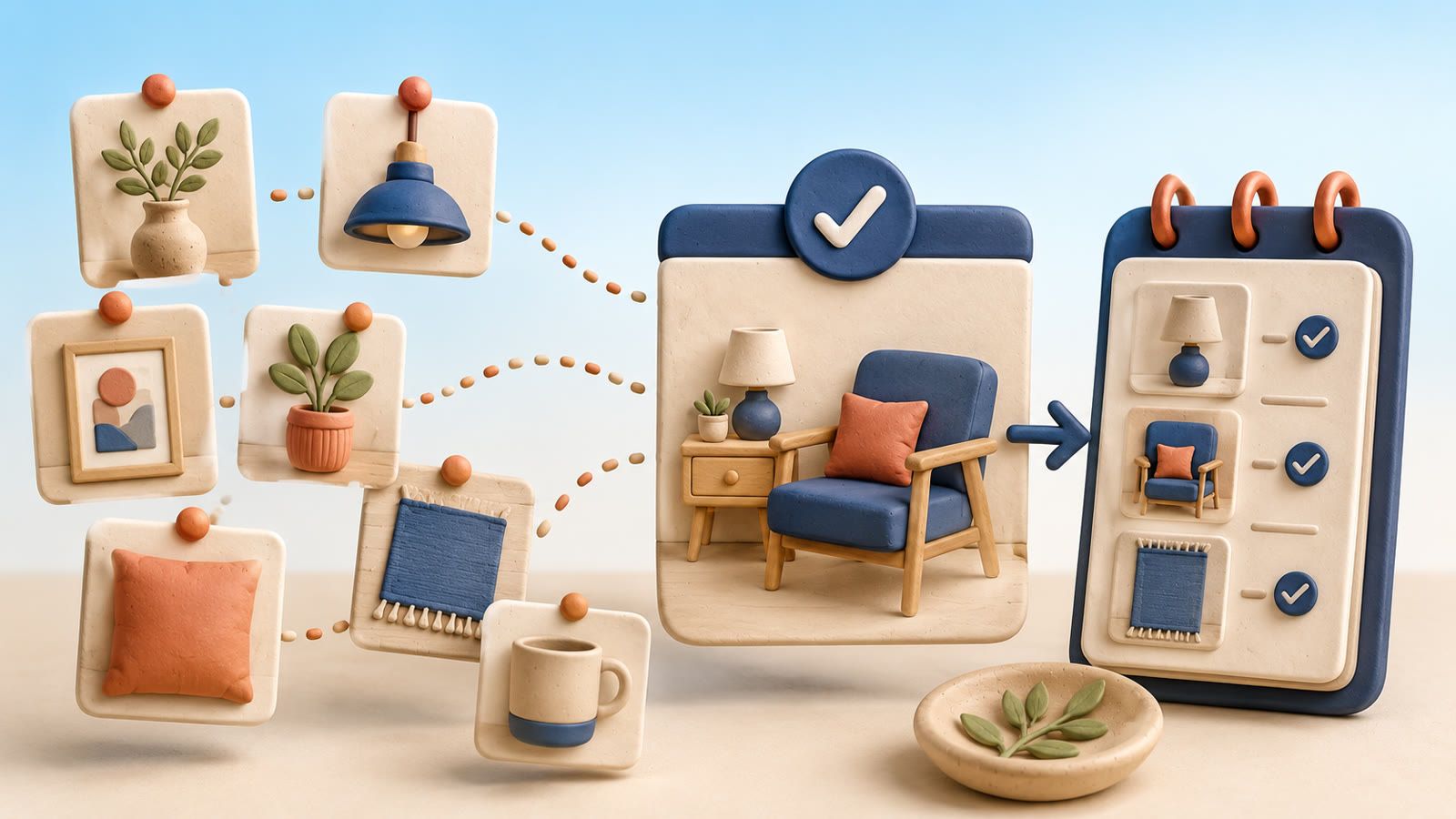
Pinterest boards are built around visual memory. That makes them useful when you know you saved “a curved green lamp” but not its maker. Shopping requires a second layer of information: who sells it, which version you chose, whether it is still available, and what you would accept as an alternative.
A pin can outlive the page behind it. It may point to an editorial roundup, an affiliate redirect, a marketplace listing that has ended, or a shop that replaced the original URL. Sometimes the picture has been reposted so often that the linked page never sold the pictured object at all. The fix is not to stop pinning. It is to promote promising pins into purchase-ready records.
What to save with a Pinterest product
Start by opening the pin and following its outbound link. On the destination page, verify four things before treating it as the source:
- The product photo and details match the pin.
- The seller appears to be the manufacturer or a retailer actually offering the item.
- The page shows the variant you want, such as size, finish, capacity, or color.
- The URL opens independently in a new tab without requiring the Pinterest session.
Then save the merchant page, not merely the Pinterest image URL. Keep the pin too when it contains useful styling, room context, or comments, but label the roles clearly: one link is inspiration; the other is the place to evaluate or buy.
Add a short note in your own language. “For narrow hall—must be under 25 cm deep” will be far more useful later than the product’s promotional title. For clothing, record the chosen size and color. For furniture, add the dimensions that matter in your space. For gifts, add the intended recipient without putting sensitive information into a public board.
How to save Pinterest products to buy later
A lightweight two-minute process prevents most dead-end saves. It also forces a useful question: is this a product you may buy, or simply an image you like?
If it is only inspiration, leave it on the board. If it is a real candidate, open the underlying retailer page and save it through the dEssence Chrome extension, send the link to the Telegram bot, or add it through the web at dessence.ai. Include the Pinterest pin in the note when you want to preserve the original context.
Saving does not automatically begin price or stock tracking. On a saved item, you decide whether to set up a watch. That distinction keeps casual inspiration from becoming a flood of checks. A lamp that fits your measured space might deserve watching; the seventeenth lamp in a mood board probably does not.
When comparing stores, look beyond the displayed price. Shipping, taxes, assembly, return postage, and final-sale conditions can change the practical total. Confirm that two listings are truly the same model and size before treating one as cheaper. Similar product photography can conceal different materials or dimensions.
Use the pin as evidence, not authority
The text attached to a pin may have been written by the original seller, an affiliate publisher, or someone who simply liked the picture. Treat claims about material, dimensions, safety, authenticity, or compatibility as unverified until the merchant or manufacturer supports them.
For higher-risk purchases, go one step further. Find the model number, care instructions, warranty terms, and independent reviews. If the destination is an unfamiliar shop, check its contact details, return policy, accepted payment methods, and whether product photos appear consistently elsewhere. An attractive pin is not proof that a retailer is trustworthy.
You may want to clean a long referral URL before saving it, but do not strip parameters blindly. Some stores use parameters to retain a selected finish or size. Test the shorter address in a separate tab first. The goal is a durable link that still opens the correct product, not merely a neat-looking one.
What to do when the original pin link is dead
A dead source is a research problem, not an automatic invitation to buy the first similar object you find. Begin with evidence visible in the pin: brand marks, model names, distinctive hardware, pattern names, materials, and proportions. Check the pin description and comments for an original maker or retailer, while remembering that community answers may be wrong.
Next, search using two or three distinctive attributes rather than a generic category. “Oak wall shelf” is broad; “rounded oak wall shelf brass rail” is more discriminating. A reverse-image search can reveal earlier copies of the photograph, archived editorial coverage, or the maker’s own listing. Prefer the oldest credible source or an official catalog over a page that merely reused the image.
If the exact item has been discontinued, define what you are trying to preserve before searching for an alternative. Is it the scalloped edge, a 60 cm width, solid wood, a particular shade, or the way it fits a corner? Choose two non-negotiable traits and let the rest vary. This turns an impossible hunt for a duplicate into a controlled comparison.
Keep the dead pin attached to your note as visual provenance. Mark replacement links as alternatives, not matches, until you verify dimensions and materials. If handmade work is involved, do not ask another maker to copy a distinctive design exactly; use the original as a starting point for discussing functional needs and a genuinely different commission.
Keep the list small enough to choose
Shopping boards grow because saving feels like progress. Actual progress comes from elimination. Once a week—or before a planned purchase—scan serious candidates and remove duplicates, unavailable variants, wrong dimensions, and options that exceed the budget after delivery.
A useful shortlist has a decision attached: buy now, watch, compare in person, ask for measurements, or release. In dEssence, the Free plan is $0 forever with no card, up to 20 saves a day, and 100 watched things checked daily. Pro costs $10 a month, allows a higher daily save limit, 100 watched things checked hourly. The right plan depends on how many active candidates need monitoring, not on how many inspirational pins you enjoy keeping on Pinterest.