How to Organize Kids' School Papers at Home
The backpack pile is really three piles: something due, something to keep, and something to bin. A weekly sort that takes ten minutes, plus what to do with the form that has to be back on Friday.
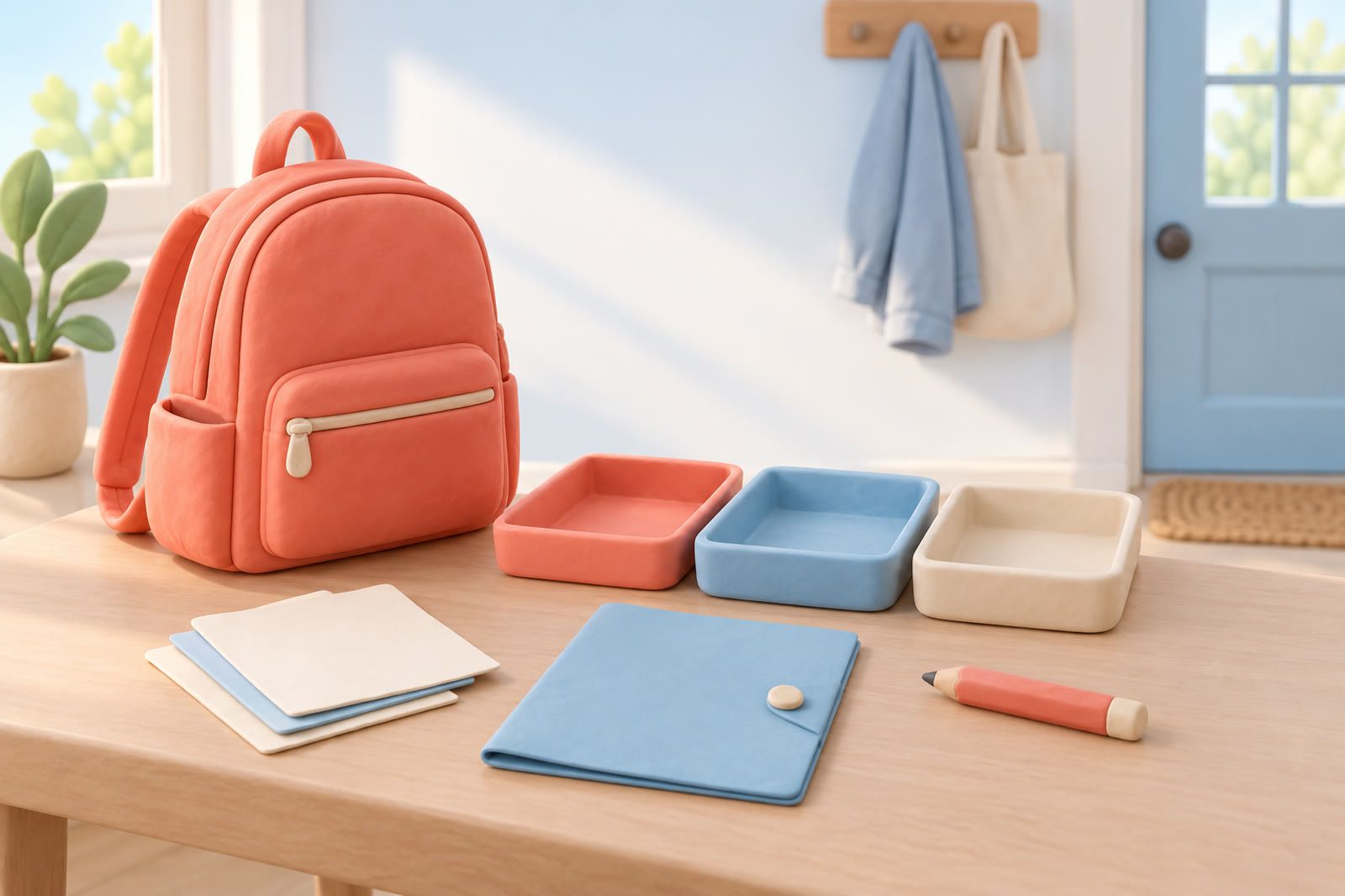
The easiest way to organize kids school papers is to give every sheet a next destination: something to do, something to keep, or something to discard. Put the sorting point beside the backpacks, keep dated forms at the front, and give the remaining pile ten minutes each week.
You need three trays or folders, a pen, and one school-year folder per child. Use containers you already own. The system should still work when everyone arrives home hungry and someone empties a backpack onto the floor.
How to organize school papers at the door
Choose the place where backpacks actually land. A beautiful organizer upstairs will not help if papers stop on the kitchen counter. Put an inbox tray there, with the three sorting destinations beside or underneath it.
Teach one small routine: lunch container out, school folder out, loose papers into the tray. Younger children can do that part while an adult checks instructions. For several children, write their names on folder tabs; separate the Action section by child only if mixed forms are causing mistakes.
Keep school forms organized by deadline
Do a quick deadline check on arrival, even if the weekly sort is days away. A Friday permission slip cannot wait until Sunday's tidy-up. Read both sides, identify what must be returned, and check whether money or another attachment is required.
Write the task as an action: “Sign Maya's museum permission slip and put it in her return folder Thursday evening.” Include the actual due date separately. “Museum” alone will mean very little when a reminder appears during dinner.
Inside Action, place the earliest deadline first. Keep completed forms in the school folder's return pocket, then put that folder back into the backpack. A signed sheet sitting on the counter still has another journey to make.
For tasks that need another adult, write the handoff on the same note: “Alex checks emergency number; Sam returns form.” Assign one person to finish the return. If a payment is required, keep the confirmation with the form until the school acknowledges it or the event has passed.
What to photograph, what to keep
Scan reference information that earns its space: the class supply list, a project rubric, trip instructions, or an announcement with a contact number. Open the image afterward and zoom into the smallest print. Include the reverse side if it contains instructions.
On iPhone, open Notes and create a note, then choose Attachment > Scan Documents. Frame the page, adjust the crop if needed, and finish the scan. Apple's guide, How to scan documents on your iPhone or iPad, documents this built-in route. Title the note “Maya — museum trip — October 2026” and add the return deadline as typed text.
Keep a paper original when the school needs the signed sheet back. Keep current official reports or support documents in the child's school-year folder rather than making a disposal decision during a hurried backpack check. For routine announcements, a readable scan is usually enough for home reference once any action is complete.
The ten-minute weekly school-paper reset
Pick a moment already attached to school preparation, such as Sunday backpack packing. Start with Action: finish quick signatures, check approaching deadlines, and move completed returns into backpacks. Compare unfinished homework with the teacher's instructions before filing it away.
Next, empty the inbox. Move reference sheets into Keep, choose artwork together, and discard the obvious leftovers. Remove expired lunch menus and old event notices from the current reference section.
Finish by checking supplies around the station. Put the pen back and replace a torn folder. If the pile repeatedly survives the reset, reduce the decisions: fewer keepsakes, fewer scanning jobs, and a smaller display. Adding more trays usually just gives unfinished sorting more places to sit.
The first week does not need a cleared archive. Start with today's backpack and the next deadline. Once those papers have a dependable route home and back to school, older piles become a smaller, separate sorting job.