How to Build a Capsule Wardrobe Wishlist Before You Buy Anything
A capsule wardrobe fails when you buy the pieces in the wrong order. Build the list before the shopping: name the gaps, collect candidates from any store, let them sit, and only then decide which ones are worth the money.
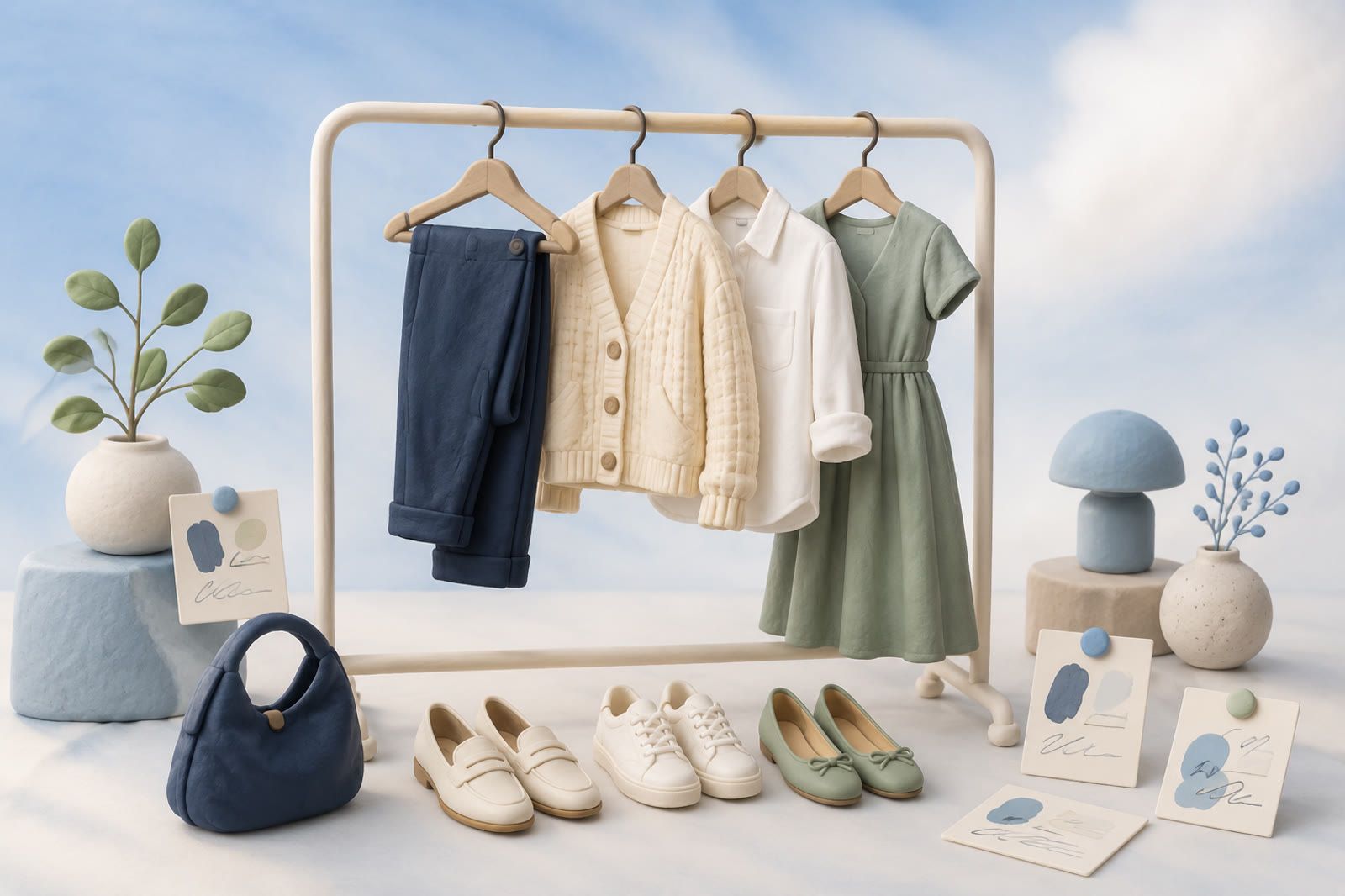
A capsule is not simply a small wardrobe. It is a group of clothes that can cover your actual routines with fewer dead ends: the trousers that work with three tops, the jacket that fits over both a shirt and a knit, and the shoes you can wear for the whole journey rather than just the photograph.
That makes a capsule wardrobe shopping list different from an ordinary wishlist. A wishlist records attraction. A shopping list records a job that still needs doing.
Begin with what you already own. Pull out the pieces you reliably wear, ignoring anything that only fits a hypothetical version of your life. Photograph or list them, then note the recurring situations you dress for: office days, school runs, dinners, travel, exercise, formal events, or wet-weather errands. Your list should close the gaps between those situations and your existing clothes.
Build your capsule wardrobe shopping list by role
Write roles, not product fantasies. “Dark straight-leg trouser for work and dinner” is useful. “Black trousers” is too broad, while “that viral pleated pair” starts with a product before you have proved the need.
For every proposed role, write four constraints:
- Outfits: name at least three combinations using pieces you already own.
- Conditions: include weather, walking, washing, dress code, and layering.
- Fit: record the measurements or fit details that usually decide success.
- Budget: set a ceiling before browsing so a polished product page cannot move it.
If you cannot make three plausible outfits, the missing item may not be the problem. You might be trying to build around a difficult piece that does not belong in the core capsule.
A practical first list is short: perhaps one layering piece, one bottom, one shoe, and one weather-specific item. Starting with fifteen gaps turns the exercise into a replacement spree.
Compare capsule candidates across stores
Retailer wishlists are useful, but they split one decision into separate tabs and accounts. A jacket saved at one store is hard to compare with the secondhand option, the independent-label version, and the less expensive alternative elsewhere.
Keep candidates together by wardrobe role. dEssence can act as that layer above the stores: save from the Chrome extension, Telegram bot, or web at dessence.ai, then describe the role in words you will recognize later. For example: “navy raincoat, fits over cream knit, commute candidate.” It has no native iOS or Android app, so use Telegram or the web when you are away from Chrome.
Do not treat saving as approval. Keep the original price, material, care instructions, return conditions, available size, and the one uncertainty you still need to resolve. When two candidates look equivalent, the deciding detail is often maintenance or fit rather than color.
Watch price and size only after the shortlist
Price watching is most useful after an item passes the wardrobe test. In dEssence, saving an item does not automatically start monitoring it. You choose a saved item and set up price or stock watching yourself.
That distinction protects the list from noise. Watching every attractive item creates alerts without decisions. Watching the final cardigan in the correct size answers a clear question: can I buy the right item within my budget before it sells out?
Stock signals are prompts to reassess, not commands to rush. If your size becomes scarce, ask whether the candidate still meets every original constraint. A countdown, low-stock label, or temporary promotion does not improve fabric, fit, or outfit compatibility.
Use a one-in decision, not an automatic one-out rule
“One in, one out” can prevent growth, but it can also force a false symmetry. A raincoat does not need to replace a blazer simply because both hang in the outerwear section. Instead, decide what happens to the old piece before buying: keep it because it serves a different role, repair it, alter it, resell it, donate it responsibly, or decline the new purchase.
The final checkout test is simple:
- Does this fill a named gap?
- Can I make three outfits from clothes I already own?
- Does it meet the fit, care, weather, and budget constraints?
- Would I still choose it without the sale message?
- Can I return it after trying it with the actual outfits?
A “no” does not always mean never. It means the candidate stays a candidate.
Capsule wardrobe shopping list questions
How many items should be on the list?
As few as your current wardrobe requires. Three well-defined gaps are more actionable than a generic checklist of thirty essentials. Capsule size is an outcome of your life, climate, laundry rhythm, and dress codes—not a universal target.
How long should I wait before buying?
Seven to fourteen days is useful for ordinary purchases. Wait longer for expensive or highly seasonal items. Replace immediately only when delay creates a real problem, such as having no safe footwear for work.
Should basics all be neutral?
No. Compatibility matters more than beige, black, or navy. A repeated green or red can function like a neutral inside your own wardrobe if it combines easily with what you wear.