How to Actually Use Your Saved Pinterest Recipes
Turn saved Pinterest recipes into meals with a short weekly list, source checks, and a simple path from pin to dinner.
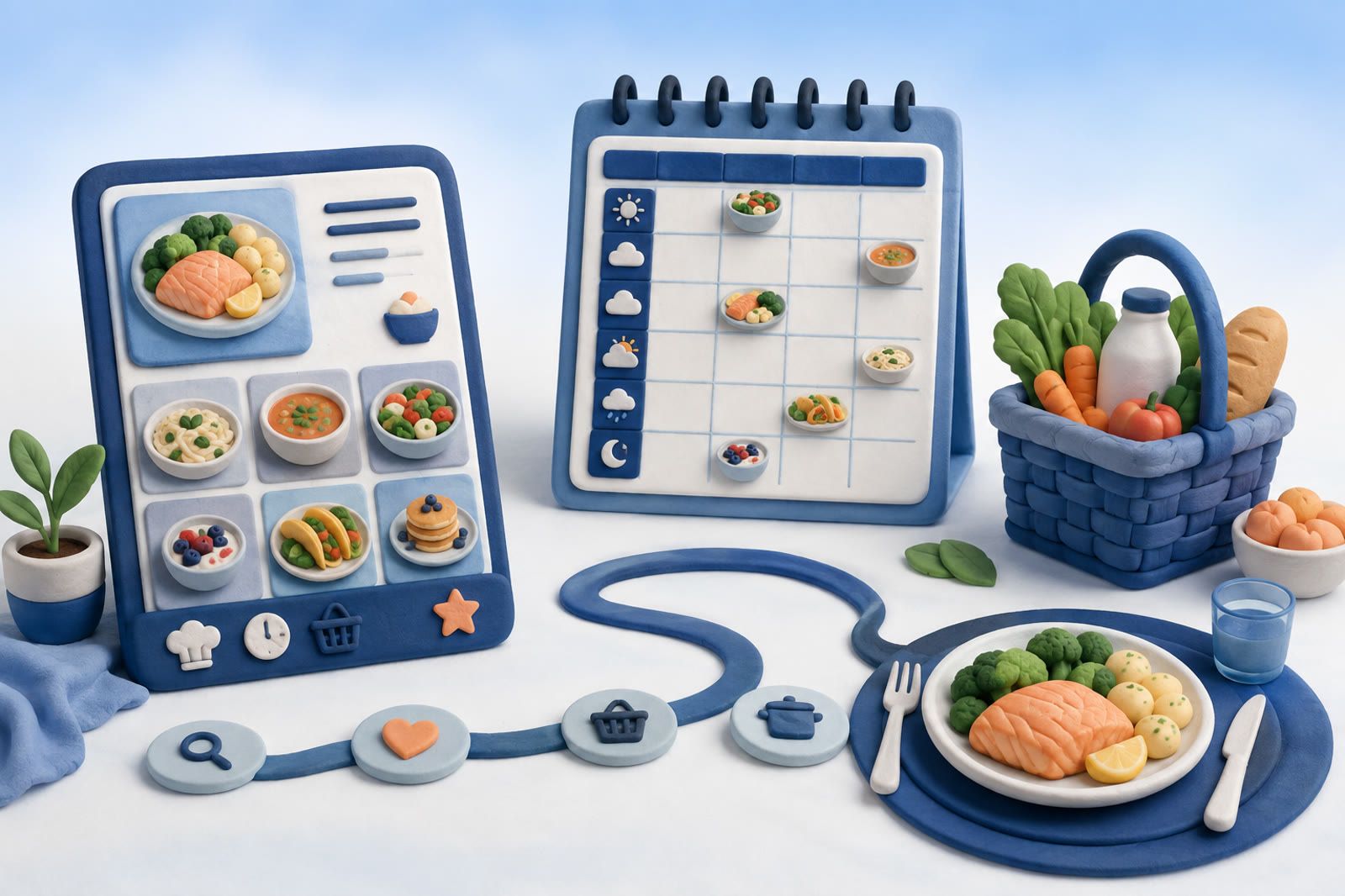
Separate collecting from choosing
Saving a recipe and deciding to cook it are different actions. Pinterest makes collecting easy, but a pin does not prove that the dish fits your schedule, ingredients, equipment, or appetite.
A large board is a useful pool of possibilities. It is a poor weeknight decision-maker. When you are tired and hungry, its grid creates more browsing and evaluation.
If retrieval is the immediate problem, see how to find a saved Pinterest recipe without scrolling.
Make a short list before dinner becomes urgent
Once a week, review the board when you have time to choose. For each candidate, ask:
- Does the source page still work?
- Are the main ingredients clear?
- Does the method fit the available time and equipment?
- Would you choose it over your usual meal?
- Is there a specific day when it makes sense?
Remove recipes that depend on ingredients you will not buy or preparation you will not do. You are not rejecting them forever; you are deciding whether they belong in the current plan.
Move the chosen links to the place where meal planning already happens: a note, calendar entry, shopping list, text thread, or small current-week board.
Open every source before adding it
A pin image can conceal a missing or changed source. Open the destination while planning, not when you are ready to cook. Check that the page contains the expected recipe, scan the ingredients and method, and make sure the image, title, and instructions describe the same dish.
A Pinterest save is a link, not a copy. If the source is gone, search for the recipe title and creator while those clues remain visible. See also: what to do when a saved Pinterest recipe leads to a dead link.
A working link can enter the active plan. A broken or misleading one cannot.
Search from the constraint you have
Cuisine and meal-type boards may not answer the real question: what can I make with tonight’s ingredients and time?
Search for concrete terms likely to appear in titles or descriptions:
- chickpeas, rather than browsing Vegetarian
- sheet pan chicken, rather than opening every Dinner pin
- no bake dessert, when the oven is occupied
Ingredients, dish names, cooking methods, and visible details work better than “the easy one I liked.”
Keep a small active rotation
The full Pinterest board can stay large. The list you cook from should remain small.
After cooking, decide whether the recipe belongs in your regular rotation. Keep successful dishes in an easy-to-reach note, focused board, or recipe app. Add a personal detail such as the occasion when it worked or an ingredient you substituted.
Recipes not yet tried can remain possibilities. Recipes planned soon belong in the current plan. Recipes you liked belong in the active rotation. You do not need to classify every old pin; apply the system when a recipe becomes relevant.
Pick a tool for the failing moment
Pinterest is useful for visual discovery. A Notion database suits people who enjoy maintaining structured collections. Recipe apps such as Paprika or Whisk may be better when recipe-specific organization matters.
If recipes are spread across Pinterest, articles, videos, screenshots, and messages, dEssence is another option for saving from several sources and asking for saved items in your own words. It is a live product and has no native iOS or Android app; its save surfaces are the Chrome extension, Telegram bot, and web app at dessence.ai. It does not provide recipe-specific features such as ingredient scaling or shopping-list export.
Choose according to the actual failure:
- If discovery is difficult, Pinterest already addresses it.
- If a known recipe cannot be retrieved, improve search and storage.
- If cooking requires structured features, choose a recipe manager.
Your board supplies options. Your short list supplies a plan. Your active rotation makes the next choice easier.