Hospital Tour Questions to Take From Reddit
Turn the useful details buried in Reddit threads into a hospital tour checklist you can carry, ask and update.
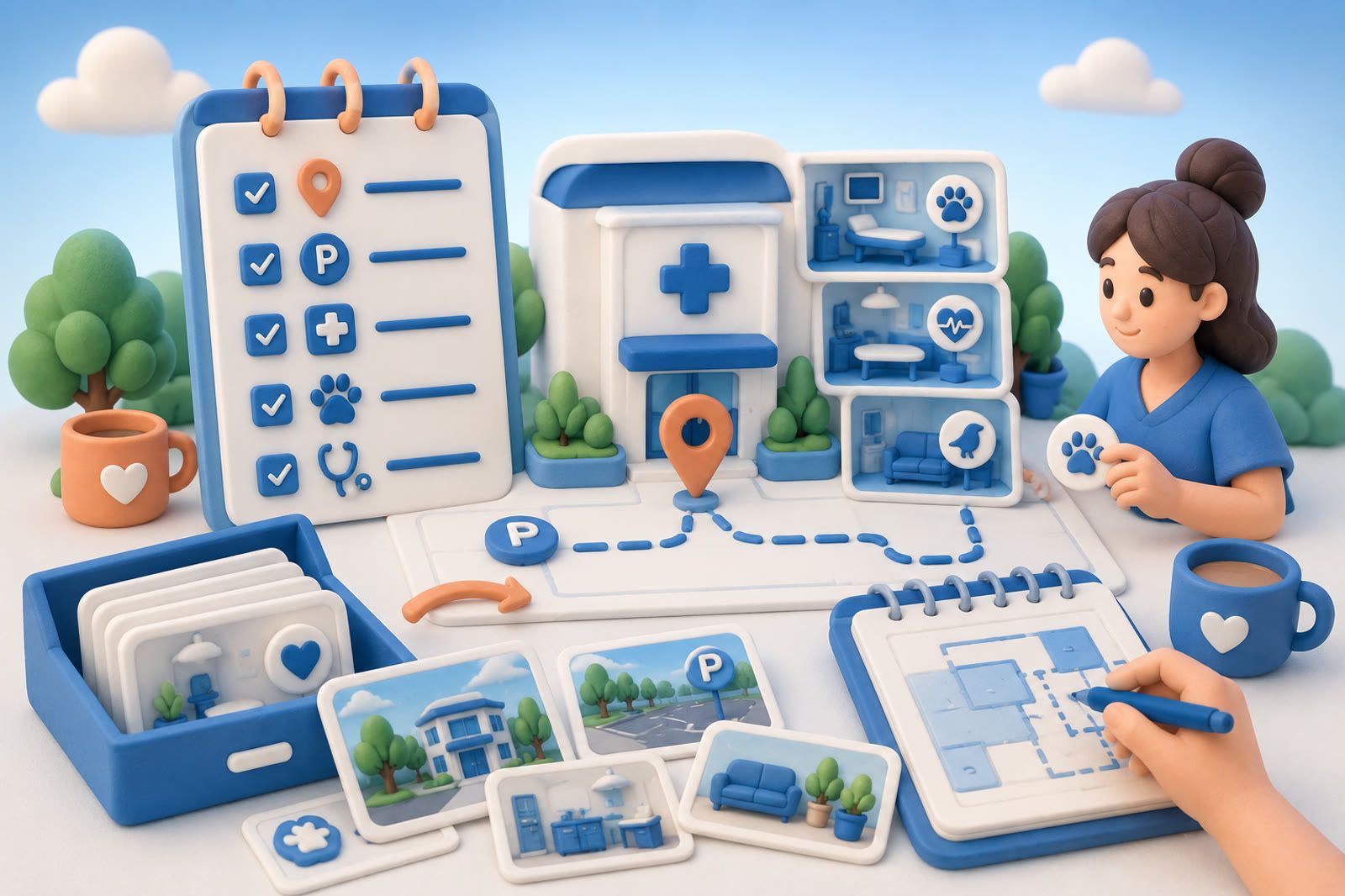
Start with the questions that affect arrival
Labor is a bad time to discover that you have the wrong entrance or do not know where to park. Ask:
- Where should you enter during the day?
- Does the entrance change at night?
- Should you call before arriving?
- Where do you go first: reception or triage?
- Where should your support person park?
- What happens if you arrive before your doctor or midwife?
Record the answers. Do not rely on remembering the route from the tour; the building may feel different when you return under pressure.
Ask what support people can actually do
Reddit birth stories often reveal a gap between a general visitor policy and one person’s experience. Use those stories to form questions, not conclusions.
Ask who may stay during labor, birth, and recovery. Confirm whether the same person can remain overnight. If siblings or other visitors may come, ask about age restrictions and escort requirements.
Visitor rules may vary by unit or time of day. Write the answer rather than leaving with a vague memory that visitors are probably allowed.
Confirm pain-relief options
If someone on Reddit mentions an option that matters to you, ask whether the hospital offers it. This includes epidurals, nitrous oxide, and non-medication options.
Ask:
- Which pain-relief options are available here?
- Are any limited by staffing or time of day?
- At what point can you request an epidural?
- Can your support person stay during the procedure?
- What should you discuss with your clinician before labor?
One person’s birth story is not a prediction. It can expose a question you might otherwise miss.
Ask about the first hours after birth
Ask about skin-to-skin policy and what could alter the plan. Confirm when lactation support is normally available and who helps outside those hours. If a Reddit comment mentions a supply, consultant schedule, or unit rule, bring the detail and ask whether it remains accurate.
Ask which postpartum supplies the hospital provides and what you should bring. Keep the answer with your packing list. Save your postpartum recovery research for the moment you need it.
Check the practical rules people forget
Ask:
- When does the cafeteria close?
- Can your support person get food after hours?
- Are there refrigerators or water-refill points?
- What should you leave at home?
- Are photos or videos restricted anywhere?
- How does discharge usually work?
Also confirm whether the tour route matches the admission route. If not, request simple directions and write them down.
Turn scattered saves into one question sheet
The useful material may be split among an upvoted Reddit thread, Chrome bookmarks, YouTube Watch Later, a doula checklist, and a friend’s voice memo.
Before the tour, search each place once. Copy every useful question into one note or print a compact checklist so you are not switching apps while walking through the hospital.
Translate each saved story into a direct question. A comment about overnight visitors becomes: “Can my support person stay overnight in both labor and postpartum rooms?” A story about limited lactation coverage becomes: “When is lactation support available, and who helps outside those hours?”
The saved story and useful question may use different words. That is why it can help to search notes by meaning instead of exact keywords.
Separate personal reports from current policy
A Reddit post describes one person’s experience. Staffing, rooms, and policies can change.
Label each line on your sheet as either Question or Confirmed answer. Add the date and source when it matters. “A parent said this on Reddit” and “a hospital nurse confirmed this during the tour” should never look identical.
Discuss any answer affecting a medical decision with your care team. A tour explains the setting but does not replace advice based on your pregnancy and health.
Save the answers, not just the questions
Leave space beneath every question and record short answers in your own words. Mark anything requiring follow-up rather than guessing.
Afterward, move the final notes somewhere you will check while packing or preparing to leave. Apple Notes works for a compact checklist. Notion works if you and your partner already share a page. dEssence is another option when source material spans saved pages, videos, and notes and you want to ask for it later.
The best system returns the answer when you are tired and using different words. That is the point of a recall-first approach to saved information: you should not have to remember which app held the original comment before using what it taught you.