How to Manage ADHD Screenshot Hoarding on iPhone
If ADHD has filled your iPhone with forgotten screenshots, stop trying to sort everything. Change how you save and retrieve useful items instead.
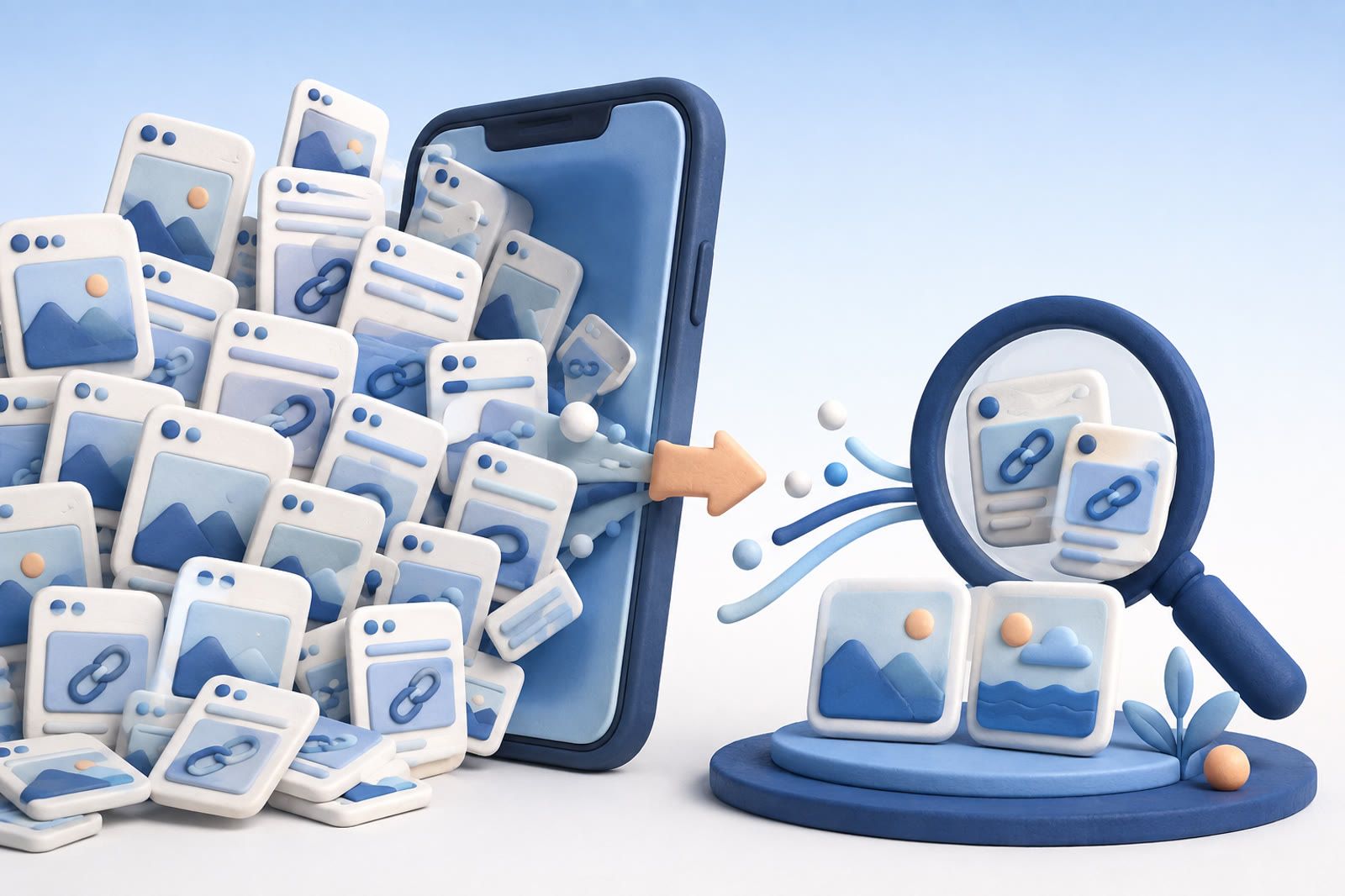
Why screenshot hoarding happens
A screenshot closes an immediate mental loop. You see a song, recipe, product, message, or book recommendation and preserve it with two buttons.
But the screenshot often represents another task: save the song, read the article, compare the product, or answer the message. If that step never happens, the screenshot remains without becoming useful. When the same item appears again, capturing it anew can feel easier than finding the first copy.
Research described in the original article found clinically significant hoarding behavior in 19% of adults with ADHD versus 2% of adults without ADHD, with the strongest association involving inattention. A large screenshot library does not diagnose ADHD. The finding helps explain why capture may feel easy while review, categorization, and discarding feel difficult.
Decide whether you need the image or its source
A screenshot is appropriate when the image itself matters: a confirmation, visual reference, message, or content that may disappear.
It is weaker when you want the object behind it. A screenshot of a song is not the song; an article screenshot is not a readable article; a product screenshot does not preserve its page or changing availability.
Ask: Do I need this image, or what it points to?
- If the image matters, keep it in Photos.
- If the source matters, save the link, song, recipe, or product page in its proper destination.
You do not need a perfect decision. The question simply removes one hidden future task when possible.
Use the screenshot view as an inbox
Open the screenshot collection when you already need something. Begin with the newest relevant images rather than scrolling through years of material.
Choose the smallest useful action for each screenshot:
- Complete the task if it is genuinely quick.
- Save the original somewhere searchable if you will need it later.
- Keep the screenshot if the image itself is valuable.
- Delete it if it no longer means anything.
Search before scrolling
Search asks you to begin with memory instead of recognizing one thumbnail among hundreds. Try a visible word, person, place, restaurant, title, author, or item type.
Search cannot rescue every blurry image or vague memory. A descriptive page title and full source are generally easier to retrieve than an isolated screenshot. See AI memory for ADHD screenshot chaos.
Move lasting items to one searchable place
Choose one destination you already understand: browser bookmarks, notes, a reading list, or a saved-item service. Use names you would naturally search. Miso noodle recipe from the red bowl video is more useful than Recipe 14.
Include why you saved it, who it was for, or what you intended to do when that context matters. For products, articles, and videos, dEssence is one option: it can preserve the original item, group related saves on boards, answer questions about saved material, and let you set a watch when you want updates.
Handle duplicates when they appear
Duplicates show that retrieval failed; they are not an emergency cleanup project. When several copies appear, keep the clearest or newest one if the image still matters, delete the others, and save the underlying item where it belongs.
This gradually improves the collection and closes the loop that created repeated captures.
Make the next save complete
At capture time, take the smallest step that makes the item usable:
- Save the source when possible.
- Add a short description when the reason is unclear.
- Set a reminder if it represents a task.
- Keep the screenshot only when the image itself has value.
A large library is not failure. Success means recovering the recipe, song, product, or message when needed, with fewer repeated captures and unfinished intentions.